

Mira for Perimenopause
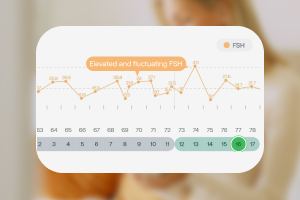
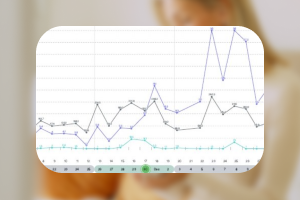
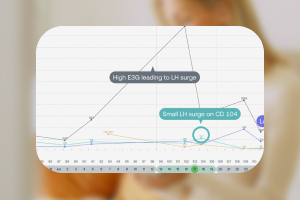
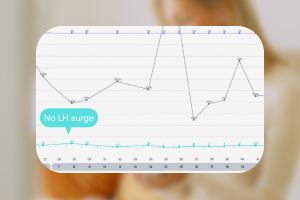
Mira supports perimenopause care by tracking hormone patterns, FSH levels, and ovarian activity—helping identify (an)ovulatory cycles, monitor HRT response, and personalize treatment.
Most common use cases
Perimenopause Tracking
Mira helps patients identify their fertility window, optimize ovulation timing, and visualize hormonal patterns for improved treatment and engagement.



Perimenopause
related webinars

PLMI: TTC, PCOS, and perimenopause case reports
This webinar highlights how tracking women's hormones with Mira improves patient outcomes through enhanced engagement and compliance. It covers cases including PCOS management, post-hysterectomy monitoring, and perimenopause, empowering providers with real-time data.

Mira in Practice: Providers' Insights & Strategies on Getting Started
In this webinar, you'll learn best practices for integrating Mira into your practice, how to identify patients who can benefit, and ways to interpret Mira data to enhance outcomes. Led by Medical Affairs Specialist Rose Mackenzie and three experienced providers, the session includes insights on partnership models, patient onboarding, and treatment personalization.

A Woman’s Cycle of Life: Maximizing Outcomes through Mira and Femmenessence
This webinar focuses on understanding women's hormonal needs throughout life, expanding clinical tools for personalized care, using Mira for fertility support, and balancing hormones with Femmenessence for optimal health outcomes.
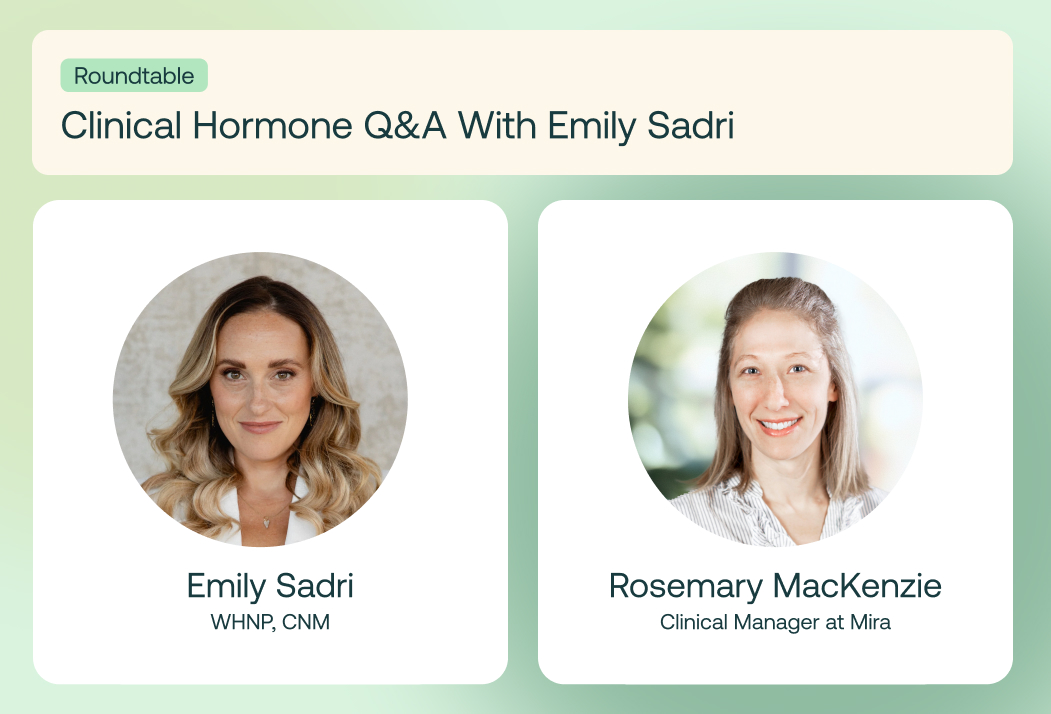
Clinical Hormone Q&A with Emily Sadri
In this clinical Q&A, Emily Sadri, WHNP-BC, CNM, and Mira Clinical Manager Rose MacKenzie discuss real-world applications of longitudinal hormone monitoring and physiologic hormone therapy (PHRT) in perimenopause and menopause care. This session serves as a follow-up to Emily’s original PHRT webinar—watch the original session here: https://aureliahealth.com/hormone-clarity-mira
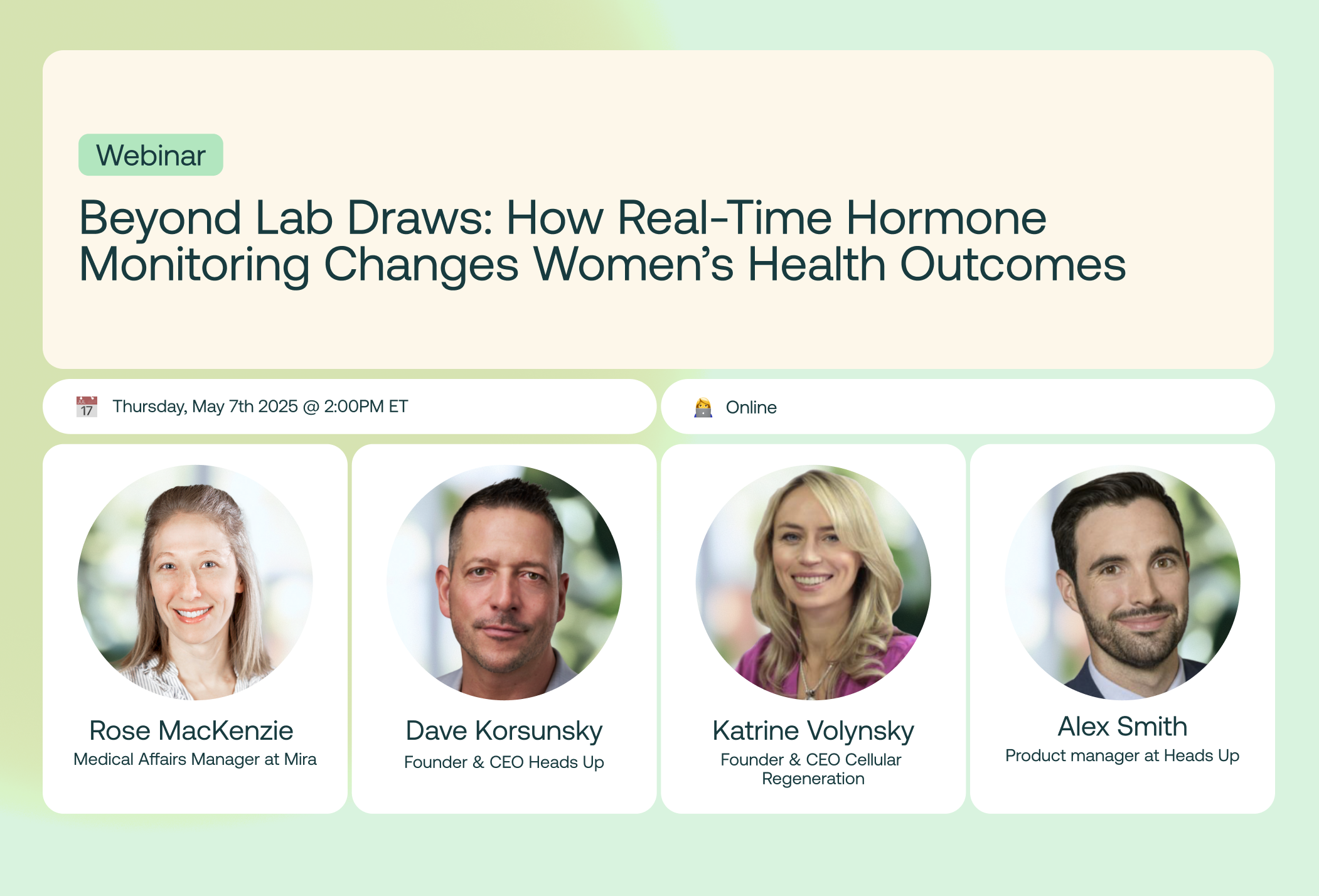
Mira x Heads Up: Using Continuous Hormone Data to Improve Clinical Decision-Making
Traditional hormone testing often captures only a single moment in time, missing the dynamic hormone fluctuations that define fertility, perimenopause, and the menopause transition. In this clinical webinar, Rose MacKenzie, Dave Korsunsky, Founder & CEO of Heads Up Health, and Katrine Volynsky, Founder & CEO of Cellular Regeneration, discuss how longitudinal hormone monitoring can provide greater physiologic context, improve diagnostic timing, and support more personalized treatment decisions in women’s health.
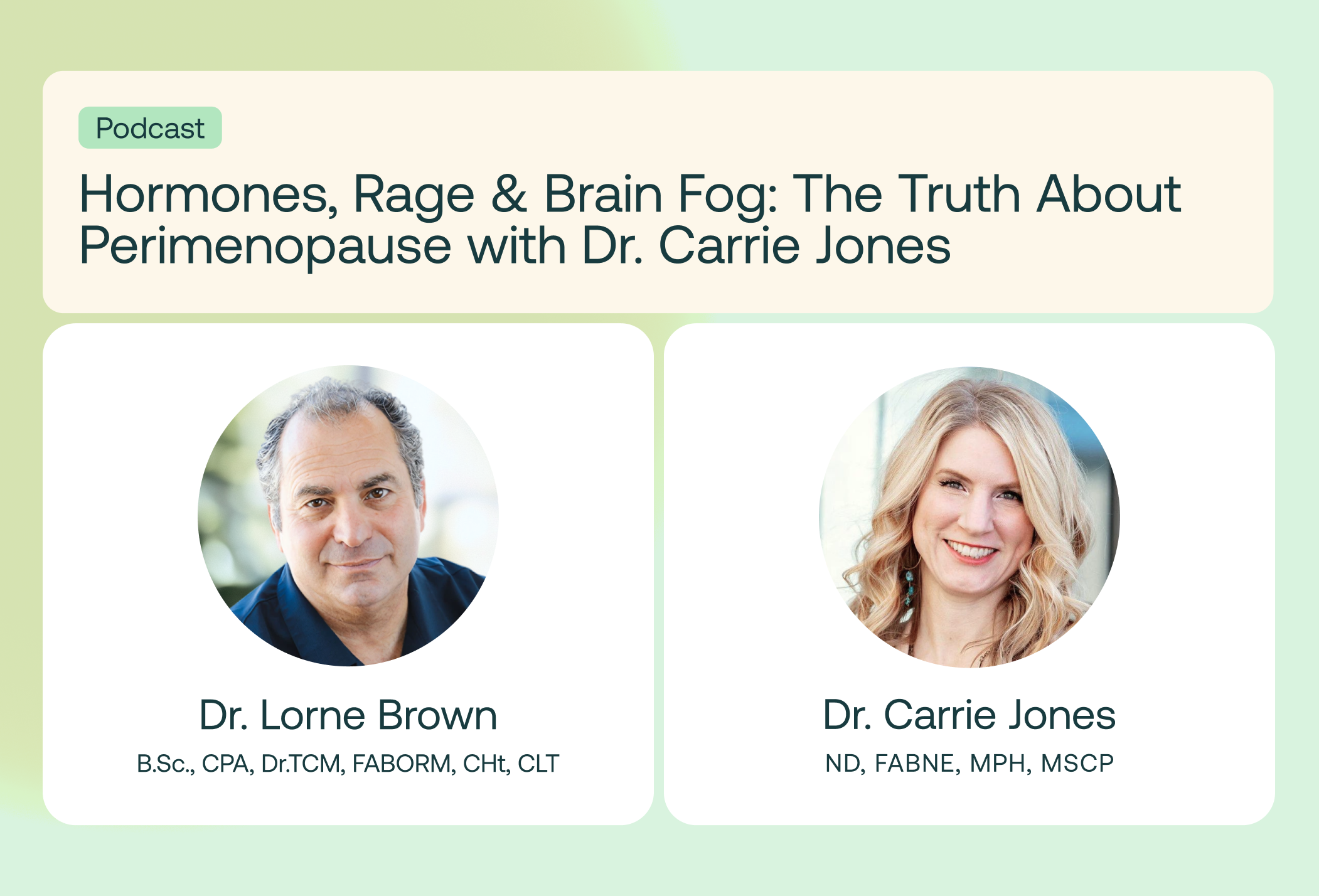
Hormones, Rage & Brain Fog: The Truth About Perimenopause with Dr. Carrie Jones
Perimenopause is often misunderstood, misdiagnosed, or completely missed. In this conversation, Dr. Carrie Jones breaks down what’s *actually* happening in the body during this transitional phase—from hormone fluctuations to the wide range of physical and emotional symptoms women experience. She explains why so many women feel “not like themselves,” why symptoms are often treated incorrectly, and how a more holistic, personalized approach (beyond just hormone therapy) is essential for navigating this stage with clarity and support.
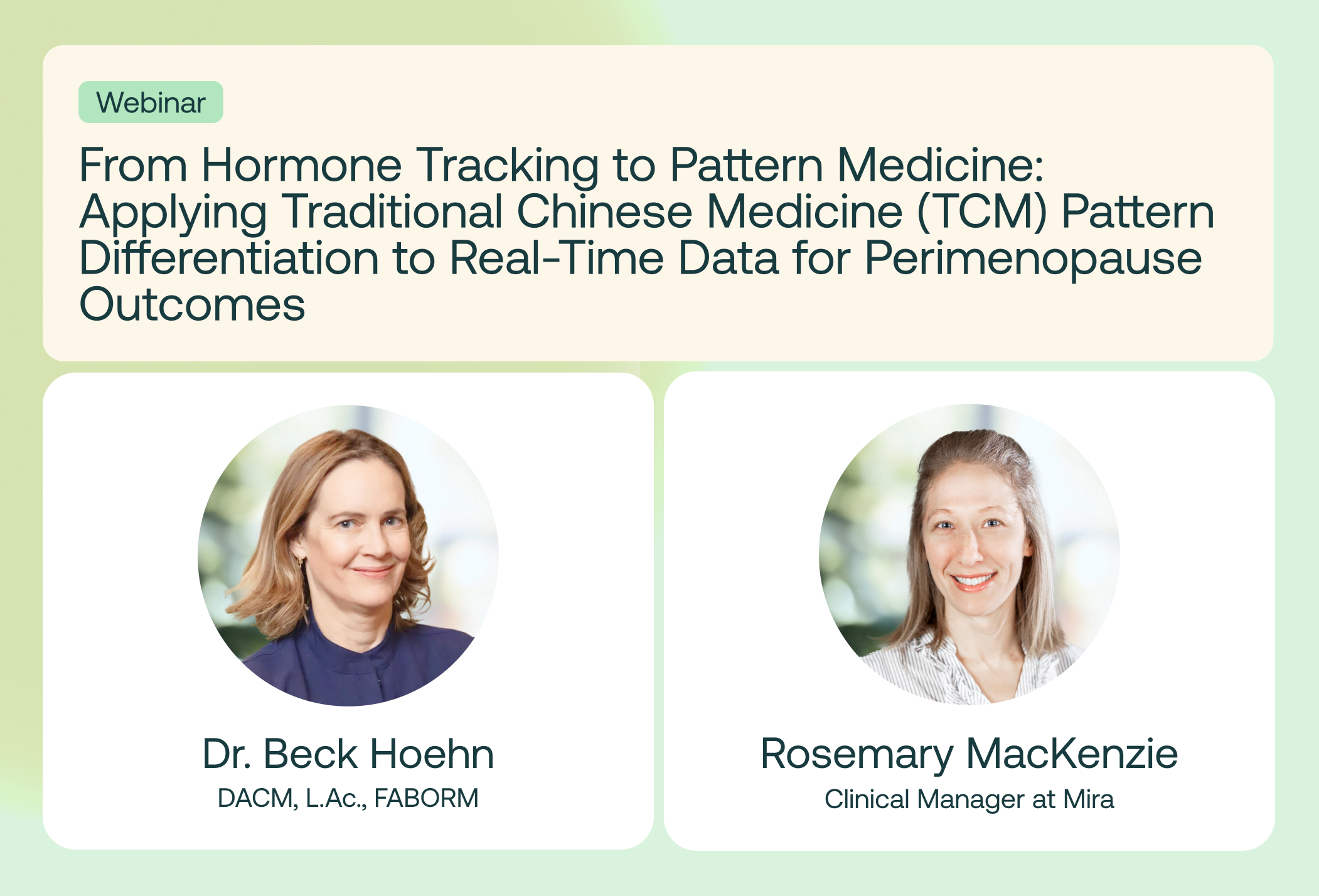
From Hormone Tracking to Pattern Medicine: Applying Traditional Chinese Medicine (TCM) Pattern Differentiation to Real-Time Data for Perimenopause Outcomes
In this session, we challenged the reliance on static lab testing to guide treatment in a phase of life that is anything but static. The menstrual cycle is inherently dynamic — and the mismatch between snapshot testing and physiological reality is one of the most common reasons complex cases stall. This lecture introduced a new clinical framework: using real-time hormone data from Mira as a window into physiological change, interpreted through Traditional Chinese Medicine (TCM) pattern differentiation. Rather than treating hormone values in isolation, participants learned to recognize functional patterns — failed transformation, weak containment, and obstructed movement — and explored how to adjust treatment as those patterns shift in real time. The approach preserves the depth of TCM while extending it with modern visibility into cycle dynamics that classical observation alone cannot capture.
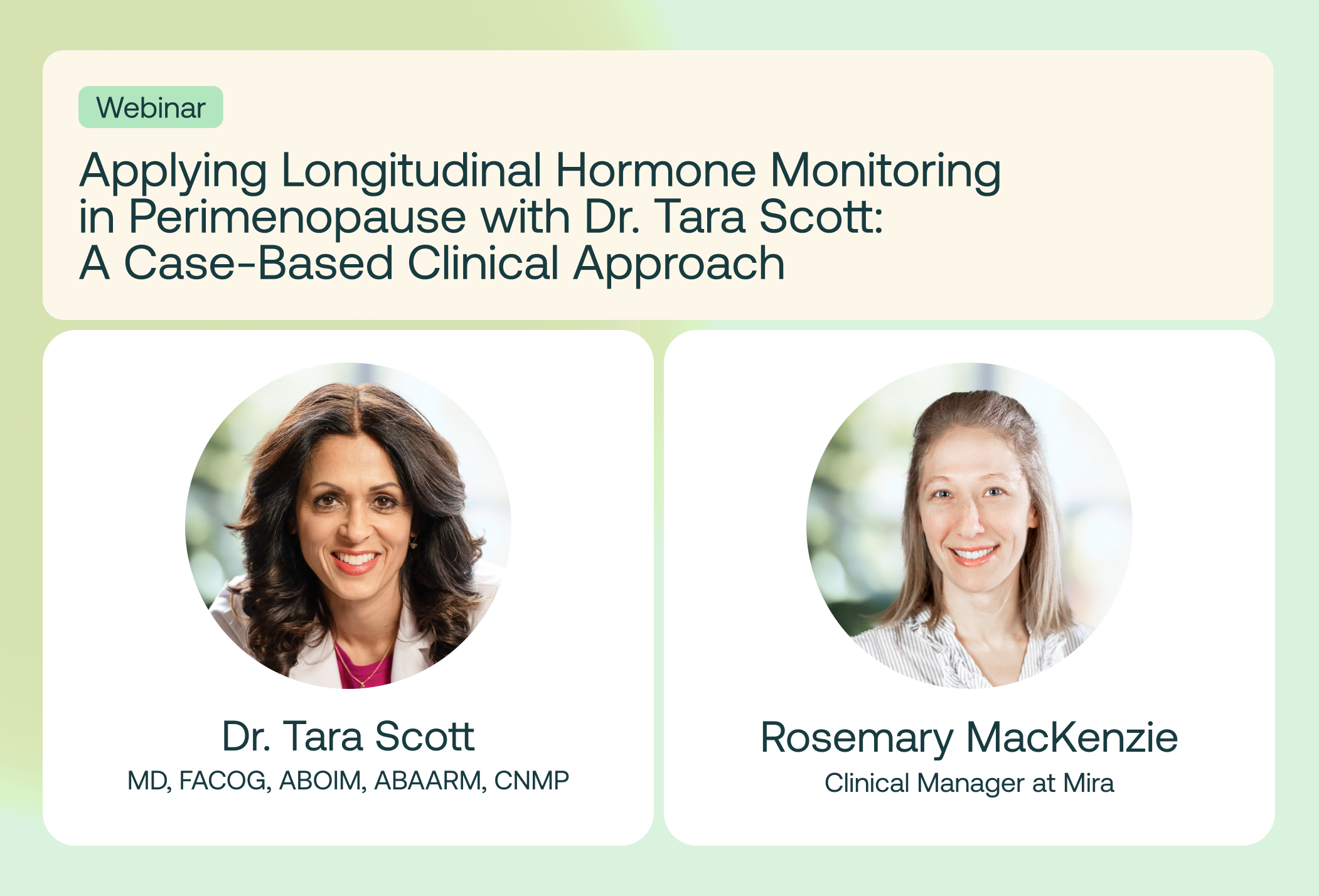
Applying Longitudinal Hormone Monitoring in Perimenopause with Dr. Tara Scott: A Case-Based Clinical Approach
Key topics included the clinical utility of real-time hormone tracking, integration with traditional and specialty testing, and the impact of hormone replacement therapy (HRT) on hormone patterns over time. The discussion also examined emerging research on follicle-stimulating hormone (FSH) as a potential risk marker independent of estradiol, and how serial monitoring may support evaluation of therapeutic response. Dr. Tara Scott MD, FACOG, IFMCP, NCMP presented clinical case applications that illustrated how these concepts can be applied in practice, reinforcing the role of longitudinal hormone data in guiding individualized care.

Clinical Hormone Q&A with Dr. Tara Scott: Tracking Perimenopause
Join hormone expert (Dr. Tara Scott, MD, FACOG, ABOIM, ABAARM, CNMP) ****for a live clinical roundtable dedicated to answering your questions about hormone tracking with Mira. Whether you’re stumped by a challenging Mira chart, navigating a complex patient case, or simply want a second opinion from a leading hormone expert, this is your opportunity to get personalized, practical advice.
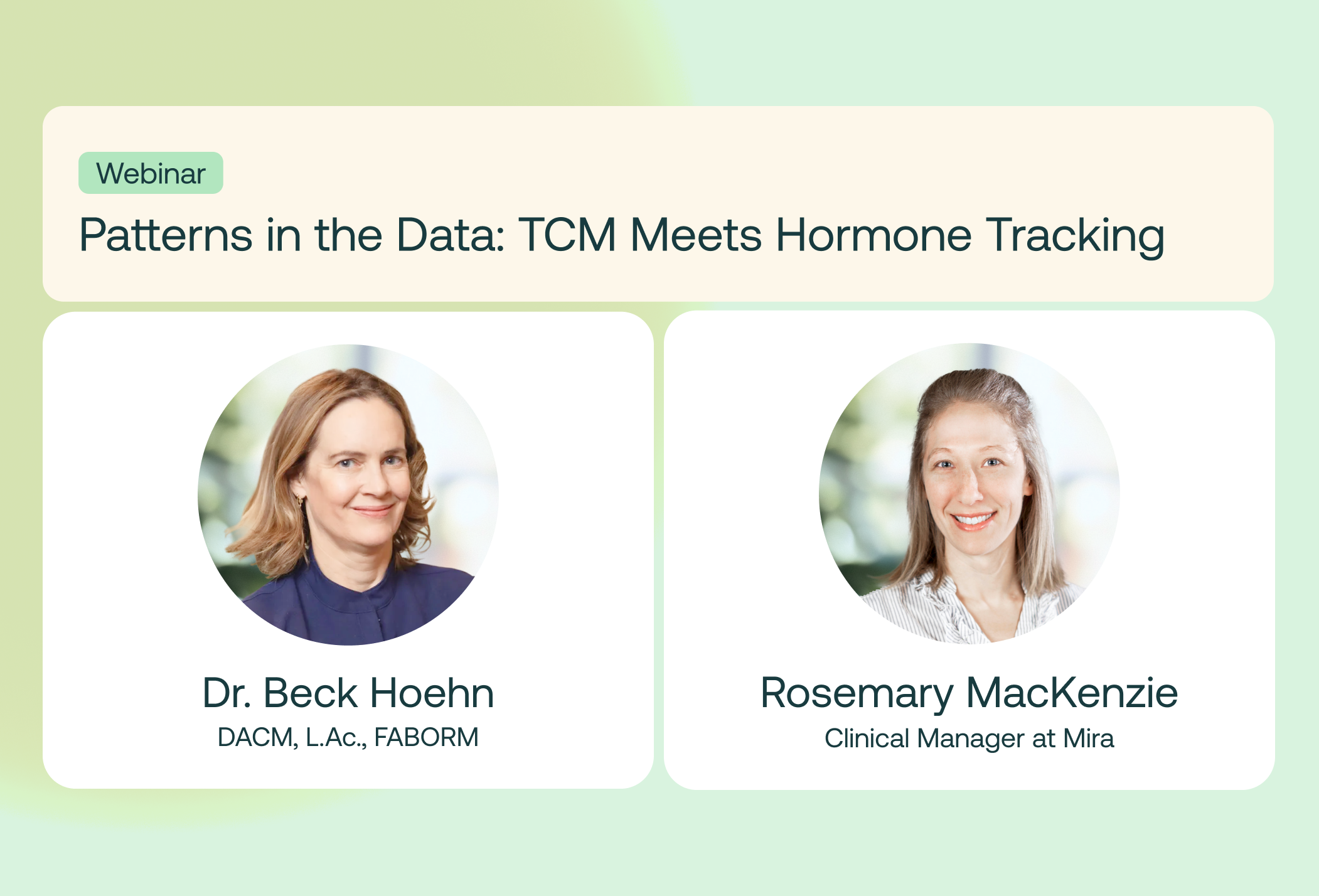
Patterns in the Data: TCM Meets Hormone Tracking
Perimenopause data is dynamic — and so are TCM patterns. Cycle-phase hormone tracking reveals fluctuations that static labs miss, giving clinicians the granular data needed to distinguish patterns like Kidney Yin deficiency with Empty Heat from Liver-Kidney disharmony. Learn to cross-reference wearable and lab data with pulse, tongue, and symptom presentation to sharpen differential diagnosis, reduce pattern misclassification, and drive more precise acupuncture and herbal treatment decisions.
Discover our most common use cases


Contact our Support Team
%20(1).png)
Book a meeting with
Tibby
Get support integrating Mira and signing up to our affiliate program, interpreting charts, and recommending it to the right patients.

Book a meeting with
Vienna
Get support integrating Mira, interpreting charts, and recommending it to the right patients. Researchers can contact Vienna for assistance.

Book a meeting with
Eva
Get support integrating Mira and signing up to our affiliate program, interpreting charts, and recommending it to the right patients. Spanish language available upon request.